 Putri Anggraini
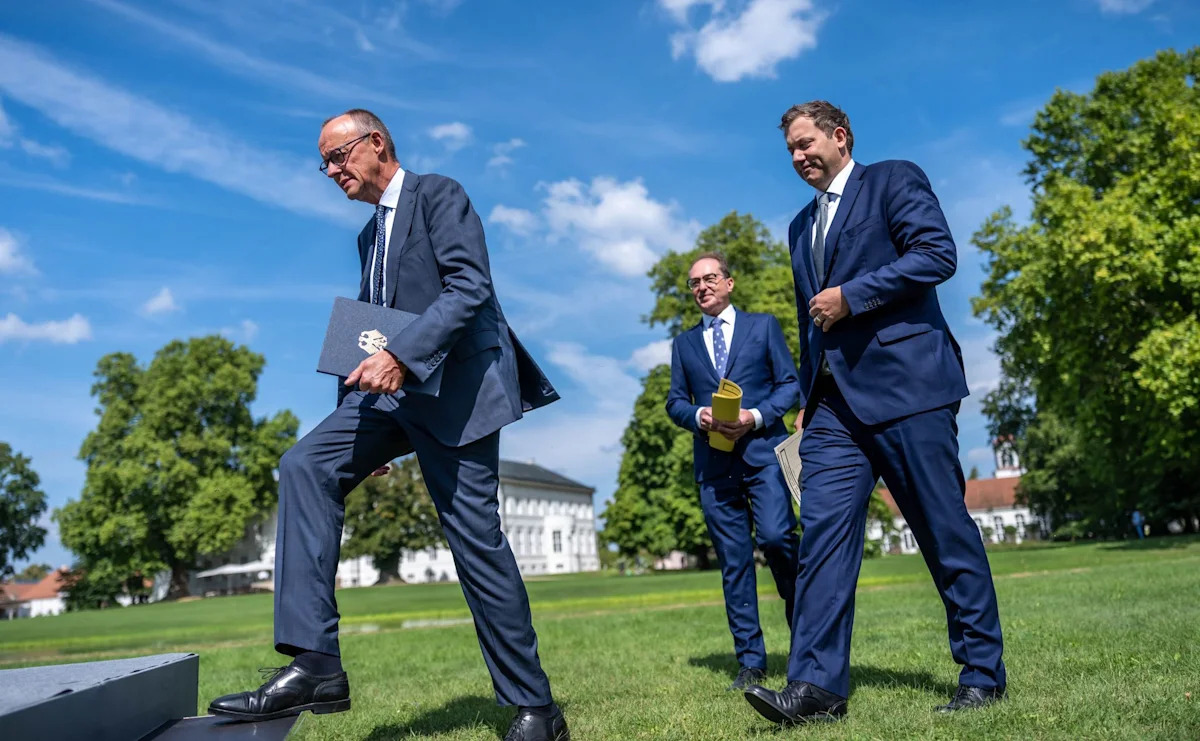
Germany is growing again, according to Chancellor Friedrich Merz, who said the country's long-awaited economic recovery has finally begun after three years of recession that tested Europe's largest economy.
The announcement marks a potential turning point for a country that has spent much of the past several years as one of the weakest performers among major advanced economies, weighed down by industrial weakness, soft demand and persistent structural problems.
Germany's downturn began in earnest in 2023, when gross domestic product contracted for the first time since the pandemic, and the decline continued into 2024. Those back-to-back contractions amounted to the country's most prolonged stretch without growth in more than two decades, reviving talk that the old "sick man of Europe" label was making an unwelcome return.
Economists attribute the slump to a confluence of shocks. Russia's full-scale invasion of Ukraine sent energy prices soaring, dealing a heavy blow to Germany's energy-intensive manufacturers. At the same time, the country's flagship automobile industry has come under intense competitive pressure from fast-moving Chinese rivals, while demand for German exports weakened. Chronic underinvestment, creaking infrastructure and a notoriously heavy bureaucratic burden compounded the damage, and political gridlock — capped by the collapse of Olaf Scholz's governing coalition in late 2024 — left Berlin without a coherent response for months.
Merz took office in May 2025 at the head of a conservative-led coalition with the center-left Social Democrats, having made reviving the economy the central promise of his campaign. Within weeks of taking power, his government pushed through a landmark fiscal package that relaxed Germany's constitutional debt brake to finance hundreds of billions of euros in infrastructure and climate investment, while carving out room for sharply higher defense spending.
The chancellor has also pledged faster planning and approval procedures, corporate tax relief and steps to bring energy costs down, arguing that private investment must be unleashed if Germany is to regain its footing. Business groups have broadly welcomed the direction, though many complain that the pace of reform still lags the scale of the challenge.
Against that backdrop, the return to growth carries symbolic weight out of proportion to any single quarterly figure. Even a modest expansion would signal that the economy has stopped shrinking, offering relief to companies and households that have endured years of fading confidence, weak order books and rising job insecurity.
Analysts caution, however, that the recovery is far from secure. New trade barriers, including tariffs imposed by the United States on European goods, continue to cloud the outlook for Germany's export-driven industry. Deeper structural headwinds — an aging workforce, lagging digitalization and dependence on imported energy — cannot be legislated away overnight, and economists warn that growth is likely to stay subdued until money from the government's spending programs begins flowing through the real economy.
An upturn in Germany would also resonate well beyond its borders. As the eurozone's largest economy and the region's industrial engine, Germany's stagnation has acted as a drag on the entire bloc, and a sustained recovery would provide welcome lift to trading partners across Central and Eastern Europe in particular.
For Merz personally, the stakes are considerable. Support for the far-right Alternative for Germany has surged amid the economic gloom, particularly in struggling industrial regions, and the chancellor has staked his political capital on delivering a lasting turnaround. Declaring the recession over is the easy part, critics note; sustaining growth strong enough to restore living standards and shore up public finances will be the true test of his tenure.
Officials acknowledge that the road ahead remains bumpy, but they insist the worst is now behind Europe's biggest economy. For a nation grown accustomed to grim headlines about deindustrialization and decline, the simple fact that output is expanding again offers the first genuine grounds for optimism in years.


Comments (0)